
How to Maximize Your Tire Lifespan: 8 Smart Ways to Make Your Tires Last Longer

Your tires are your Ford's only direct connection to the road, so keeping them in good condition is about more than avoiding an unexpected flat. Proper tire care can help promote even tread wear, maintain traction, and get more useful miles from your tires.
The good
news? Extending tire life does not require anything complicated.
Keeping
your tires at the recommended pressure, rotating them at the appropriate
intervals, maintaining proper wheel alignment and balance, and paying attention
to how your vehicle drives can all make a difference.
At Northgate
Ford, we know that driving around Port Huron means dealing with a variety
of road and weather conditions throughout the year. Whether you're commuting
along I-94, traveling across the Blue Water Bridge, or simply running errands
around town, regular tire maintenance can help keep your Ford ready for the
road.
Here are
eight ways to help your tires last longer.
1. Why Is Proper Tire Pressure Important?
Tire
pressure has a direct effect on how your tires meet the road.
When a
tire is underinflated, more of its outer tread can contact the pavement,
potentially causing accelerated wear along the edges. Overinflation can have
the opposite effect, concentrating wear toward the center of the tread.
Incorrect
tire pressure can also affect handling, ride comfort, and fuel efficiency.
Check
your tire pressure regularly, particularly before longer trips and when
temperatures change significantly.
Pro Tip: Check tire pressure when the
tires are cold and use the recommended PSI listed on your Ford's driver's
door-jamb label. The maximum pressure printed on the tire sidewall is not the
recommended pressure for your vehicle.
2. How Often Should You Rotate Your Tires?
Your
four tires do not necessarily wear at the same rate.
Depending
on your Ford and its drivetrain, the tires at one end of the vehicle may
experience different steering, braking, and traction demands than those at the
other end. Regular rotations help distribute that wear more evenly.
Many
Ford vehicles may benefit from tire rotation around every 5,000 to 7,500 miles,
but the correct interval can vary by model, tire type, drivetrain, and driving
conditions. Your owner's manual or Ford maintenance schedule should be the
final reference for your vehicle.
Regular
rotations can help:
·
Promote more even tread wear
·
Extend overall tire life
·
Maintain consistent traction
·
Support ride comfort
·
Help you get more miles from a set of tires
A tire
rotation can also be a convenient part of your routine maintenance visit.
3. Can Wheel Alignment Extend Tire Life?
It can.
Your
wheels need to maintain the correct angles so your tires can roll properly
along the road. When the alignment is off, a tire may develop uneven wear as it
makes inconsistent contact with the pavement.
Common
signs of a possible alignment issue include:
·
Your Ford pulls to one side
·
The steering wheel is off-center while driving straight
·
Tires show uneven or irregular tread wear
·
The vehicle feels less stable than usual
Potholes,
curbs, rough roads, and other impacts can sometimes affect alignment. If you've
hit a significant pothole around Port Huron or notice your Ford pulling after
an impact, having the alignment checked can help determine whether an
adjustment is needed.
4. Why Does Tire Balancing Matter?
Alignment
and balancing are two different services, but both can affect tire performance.
A wheel
and tire assembly that is out of balance can produce vibrations, particularly
as speed increases. Over time, those vibrations can contribute to irregular
tire wear and affect ride comfort.
You may
need to have your tires balanced if you notice:
·
Steering wheel vibration
·
Vibration that becomes more noticeable at highway speeds
·
Uneven tread wear
·
Changes in ride smoothness
Balancing
is commonly performed when new tires are installed, and it may also be
recommended if vibrations develop while driving.
5. Can Your Driving Habits Affect Tire Wear?
Absolutely.
Your
driving style can have a noticeable effect on how quickly your tires wear. Hard
acceleration, sudden braking, aggressive cornering, and hitting potholes can
all place additional stress on your tires.
To help
reduce unnecessary tire wear:
·
Accelerate smoothly
·
Brake progressively when traffic conditions allow
·
Take corners at appropriate speeds
·
Slow down for potholes and rough pavement
·
Avoid hitting curbs when parking
·
Maintain a safe following distance to reduce unnecessary hard braking
You do
not need to drive slowly everywhere to protect your tires. Consistent,
controlled driving can simply help reduce unnecessary stress on the tires and
other vehicle components.
6. What Tire Warning Signs Should You Look
For?
Regular
tire inspections can help you spot problems before they become bigger concerns.
Take a
few moments to look at your tires for signs such as:
·
Uneven tread wear
·
Cracks or cuts in the sidewall
·
Bulges or bubbles
·
Objects embedded in the tread
·
Low tread depth
·
Visible damage
·
A tire pressure warning light
Do not
ignore a significant bulge, exposed tire damage, or another serious concern. A
damaged tire should be professionally inspected before you continue driving on
it.
Also pay
attention to changes in how your Ford feels. New vibrations, pulling, shaking,
or unusual handling can sometimes provide an early indication that your tires
or another vehicle system needs attention.
7. Can Suspension Problems Cause Uneven Tire
Wear?
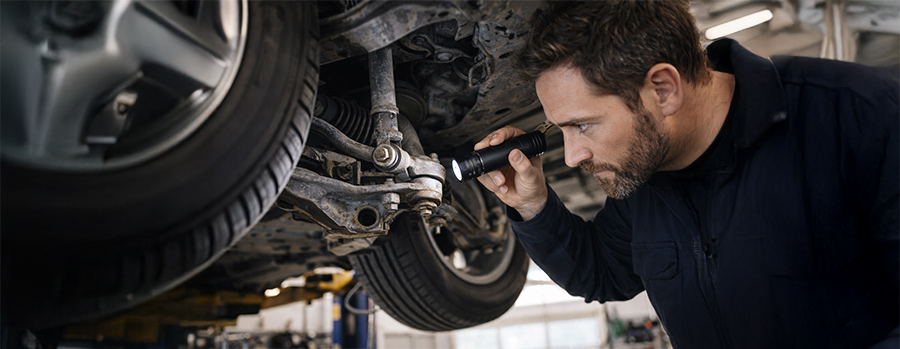
Your
tires do not work alone. They depend on the suspension and steering systems to
help maintain consistent contact with the road.
Worn
shocks, struts, bushings, or other suspension components can contribute to
irregular tire wear by changing how the vehicle moves and how the tires contact
the pavement.
You may
want to have the suspension checked if your Ford:
·
Feels unusually bouncy
·
Dips excessively when braking
·
Continues bouncing after going over a bump
·
Pulls or wanders while driving
·
Develops unusual or uneven tire wear
Addressing
suspension problems can help protect your tires while also supporting handling
and ride quality.
8. How Does Regular Ford Maintenance Help
Your Tires?
Tire
maintenance is only one part of keeping your Ford in good condition.
Your
tires interact constantly with the brakes, steering, suspension, and
drivetrain. A problem with one of these systems can potentially affect how your
tires wear.
Following
your Ford's recommended maintenance schedule gives technicians opportunities to
identify developing issues and check components that can influence tire
performance.
Think of
it as maintaining the entire system that keeps your tires connected to the
road—not simply maintaining the tires themselves.
Why Port Huron Drivers Should Pay Attention
to Tire Care
Michigan
roads can put plenty of demands on your tires.
Seasonal
temperature changes can affect tire pressure, while potholes and rough pavement
can put additional stress on wheels, tires, suspension, and alignment. Winter
driving can also make adequate tread depth and proper tire condition especially
important for maintaining traction.
Whether
you're commuting around Port Huron, traveling along I-94, crossing the Blue
Water Bridge, or heading out for a longer trip through Michigan, routine tire
care can help keep your Ford prepared for changing road conditions.
Tire Maintenance Checklist
Keeping
up with tire care is easier when you know what to check and when.
|
Maintenance Service
|
Recommended Frequency
|
Why It Matters
|
|
Check Tire Pressure
|
Monthly and before longer
trips
|
Helps promote proper tire
wear and handling
|
|
Tire Rotation
|
Around every 5,000–7,500
miles, or as recommended for your Ford
|
Helps distribute tread
wear more evenly
|
|
Wheel Alignment
|
When pulling, uneven
wear, or after a significant impact
|
Helps support proper tire
contact and handling
|
|
Tire Balancing
|
When installing tires or
when vibrations develop
|
Helps reduce vibration
and irregular wear
|
|
Tire Inspection
|
Regularly and during
routine service
|
Helps identify damage and
wear early
|
Always
follow the maintenance recommendations for your specific Ford, as service
intervals can vary by model, drivetrain, tires, mileage, and driving
conditions.
Get More Miles FromYour Tires at Northgate Ford
Your
tires work hard every time you drive. Taking a little time to maintain them can
help promote even wear, support proper handling, and maximize the useful life
of your tires.
Regular
pressure checks, tire rotations, alignment checks, balancing, inspections, and
routine Ford maintenance all play a role in keeping your tires and vehicle
performing as they should.
If
you're looking for Ford tire service in Port Huron, the team at Northgate
Ford, located at 3600 Pine Grove Ave, Port Huron, MI 48060, can help
with tire inspections, rotations, balancing, wheel alignment, and tire
replacement.
Whether
you're navigating local Port Huron roads, commuting along I-94, or preparing
your Ford for Michigan's changing seasons, proper tire care can help you get
more out of every mile.
Schedule your next tire service at Northgate Ford and keep your Ford ready for the road.